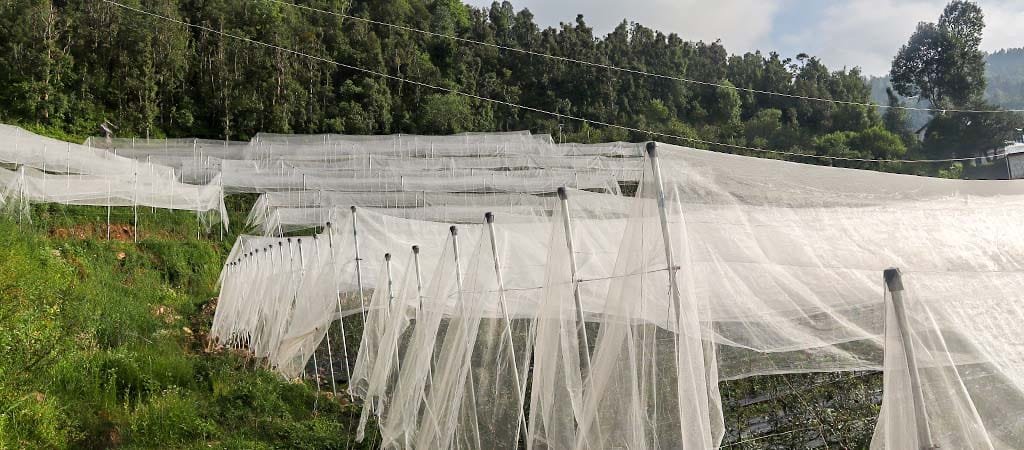
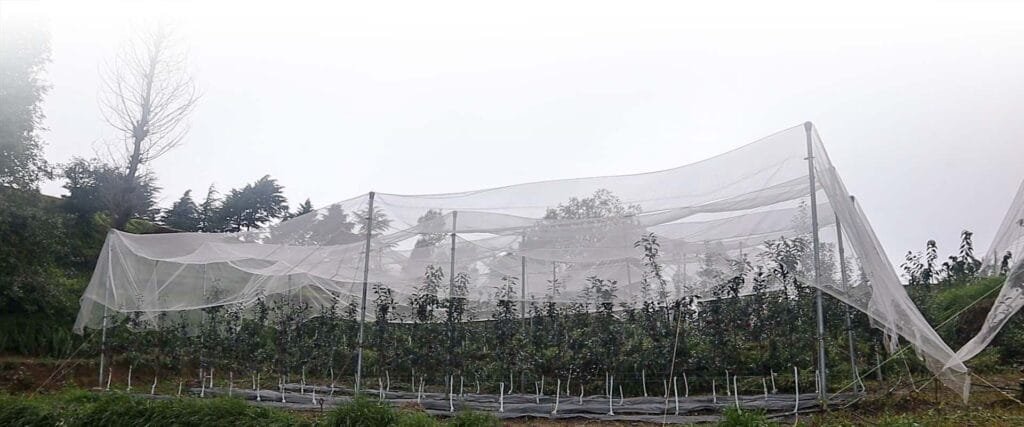
Soil and climate testing form the foundation of a successful apple orchard. Learn how soil composition, pH balance, and climate parameters affect growth, yield, and long-term orchard health.
Establishing a productive apple orchard begins long before the first sapling is planted. The success of an orchard largely depends on the suitability of the soil and local climatic conditions. Even the most advanced planting techniques cannot compensate for unsuitable environmental factors.
In India, as high-density apple farming expands into new regions like Uttarakhand, Himachal Pradesh, and even the lower Himalayas, scientific soil and climate testing has become indispensable. A detailed assessment ensures that the selected site can support healthy tree growth, nutrient absorption, and consistent fruit yield over decades.
1. Understanding the Role of Soil in Apple Cultivation
Apples are deep-rooted perennial crops, and their long-term productivity depends on how well the soil can support root penetration, aeration, and nutrient retention. The ideal soil for apple orchards should be well-drained, moderately fertile, and slightly acidic.
| Parameter | Ideal Range / Type | Impact on Growth |
|---|---|---|
| Soil Texture | Loamy to sandy-loam | Promotes root development and water balance |
| Soil Depth | Minimum 1.5 – 2 meters | Supports deep root anchorage |
| Soil pH | 6.0 – 6.8 | Ensures balanced nutrient availability |
| Organic Matter | 1.5 – 2.5% | Improves soil structure and microbial activity |
| Drainage | Well-drained (no waterlogging) | Prevents root rot and poor oxygen flow |
A poorly drained or compacted soil can lead to oxygen deficiency, weak root systems, and stunted growth. Conversely, soil that is too sandy can lead to rapid nutrient loss, requiring more frequent fertilization.
2. Importance of pH and Nutrient Balance
Soil pH plays a decisive role in determining which nutrients are available to apple trees. Apples prefer slightly acidic soils, where micronutrients like Iron (Fe), Zinc (Zn), and Boron (B) remain soluble and accessible.
| Nutrient | Optimal Availability Range (pH) | Deficiency Symptoms |
|---|---|---|
| Iron (Fe) | 5.5 – 6.5 | Yellowing of young leaves (chlorosis) |
| Zinc (Zn) | 5.8 – 6.8 | Reduced leaf size, poor fruit set |
| Boron (B) | 6.0 – 6.5 | Fruit deformity and cracking |
If the pH exceeds 7.0, these micronutrients become unavailable, leading to hidden hunger — where the soil contains nutrients, but plants cannot absorb them.
To correct this, lime or gypsum amendments are often recommended after laboratory soil testing.
3. The Science of Climate Suitability for Apple Orchards
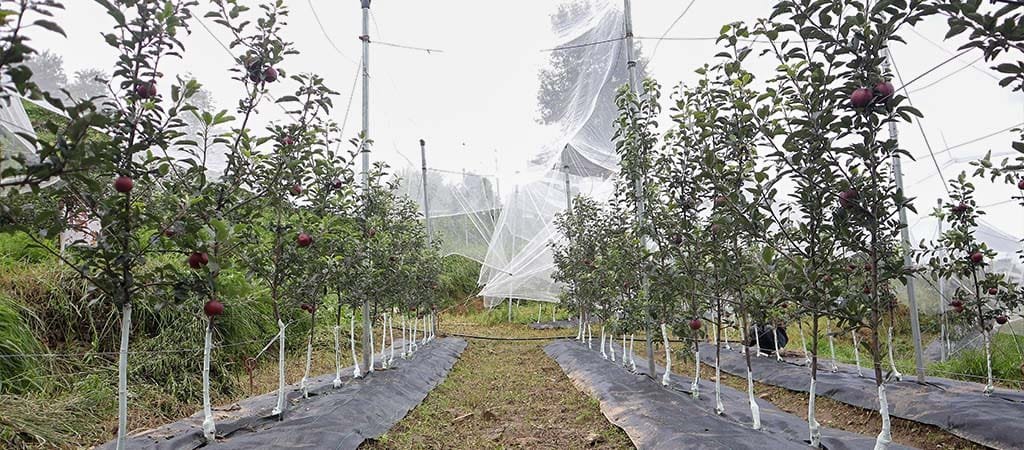
Apples thrive in temperate climates where seasonal temperature variation provides the necessary “chilling hours” required to break bud dormancy. Climate affects flowering, fruit set, color development, and overall productivity.
| Climatic Factor | Ideal Range / Requirement | Effect on Orchard Performance |
|---|---|---|
| Annual Temperature | 18°C – 24°C | Promotes balanced vegetative and fruit growth |
| Winter Chilling Hours | 800 – 1600 hrs (<7°C) | Required for uniform flowering |
| Annual Rainfall | 1000 – 1250 mm | Supports canopy development |
| Relative Humidity | 50 – 70% | Prevents fungal infections and water stress |
| Elevation | 1200 – 2500 meters above sea level | Provides ideal chilling conditions |
Chilling hours are particularly important: insufficient chilling leads to delayed or irregular flowering, resulting in poor fruit set.
Therefore, before planting, climatic feasibility mapping using regional weather data and altitude evaluation is essential for long-term planning.
4. Site-Specific Evaluation and Soil Sampling Procedures
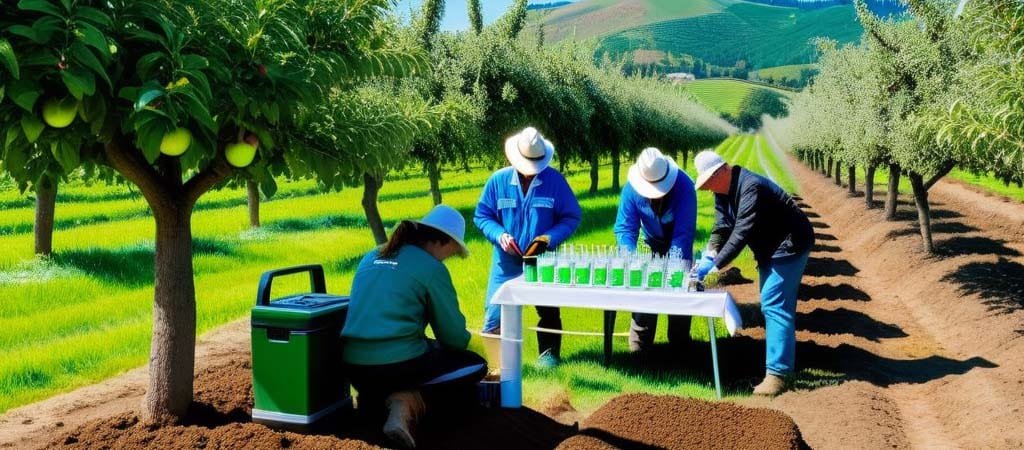
Testing begins with systematic soil sampling, usually on a grid or zigzag pattern, covering representative zones of the proposed orchard site. Each sample should be collected from two depths:
- Surface soil: 0–30 cm
- Subsoil: 30–90 cm
Laboratory testing generally includes:
- Physical parameters: texture, structure, bulk density
- Chemical parameters: pH, EC (electrical conductivity), available NPK
- Micronutrients: Fe, Zn, Mn, Cu, B
- Organic carbon and cation exchange capacity (CEC)
Interpreting these values helps determine:
- Which soil amendments are needed before planting
- Whether rootstock selection must be adjusted (some tolerate heavier or alkaline soils)
- Drainage and irrigation design
By analyzing this data, Orchard Solutions helps plan site-specific soil improvement programs to ensure optimal growing conditions from the start.
5. Climate Risk Factors and Regional Variations
India’s diverse geography means apple orchards face varying climatic risks. For instance:
| Region | Major Climate Concern | Mitigation Approach |
|---|---|---|
| Himachal Pradesh | Irregular rainfall and hail | Use of hail nets and windbreaks |
| Uttarakhand | Soil erosion on steep slopes | Contour terracing and mulching |
| Jammu & Kashmir | Frost and snow accumulation | Frost-resistant rootstocks and pruning management |
| North-East India | Excessive humidity | Proper ventilation and disease control measures |
Such data-driven analysis allows for microclimate planning, ensuring orchard sustainability and minimizing losses from unpredictable weather patterns.
6. Consequences of Ignoring Soil and Climate Assessment
Skipping soil or climate testing often leads to:
- Poor root establishment due to unsuitable soil pH or drainage
- Inconsistent flowering and fruiting cycles
- Nutrient imbalance and premature tree decline
- Economic losses due to unproductive orchards
Many farmers unknowingly plant in unsuitable zones, only to face reduced yields or orchard failure within a few years. Scientific assessment prevents these long-term losses by identifying potential risks before any investment in plants or infrastructure.
7. The Role of Orchard Solutions in Pre-Orchard Assessment
Orchard Solutions specializes in integrated pre-orchard evaluation — combining soil testing, climate mapping, and site-specific advisory. Our methodology includes:
- Detailed soil and microclimate data analysis
- Evaluation of water sources, slope, and drainage
- Recommendation of suitable apple rootstocks and varieties based on altitude and chilling data
- Guidance on orchard layout, irrigation, and fertility management
This holistic approach ensures that every orchard developed under Orchard Solutions is scientifically grounded, sustainable, and productive from the first season onward.
Conclusion
Starting an apple orchard is a long-term investment that depends on precision and foresight. Soil and climate testing serve as the scientific foundation of orchard planning, guiding every critical decision — from site selection to rootstock choice.
Ignoring these parameters often leads to costly mistakes and reduced productivity. On the other hand, investing in data-driven assessment ensures a resilient, high-yield, and sustainable orchard for years to come.
At Orchard Solutions, we believe that a successful orchard begins beneath the soil and within the climate — not after the trees are planted. Through precise soil and climatic evaluation, farmers can turn their vision into a profitable and enduring reality.